
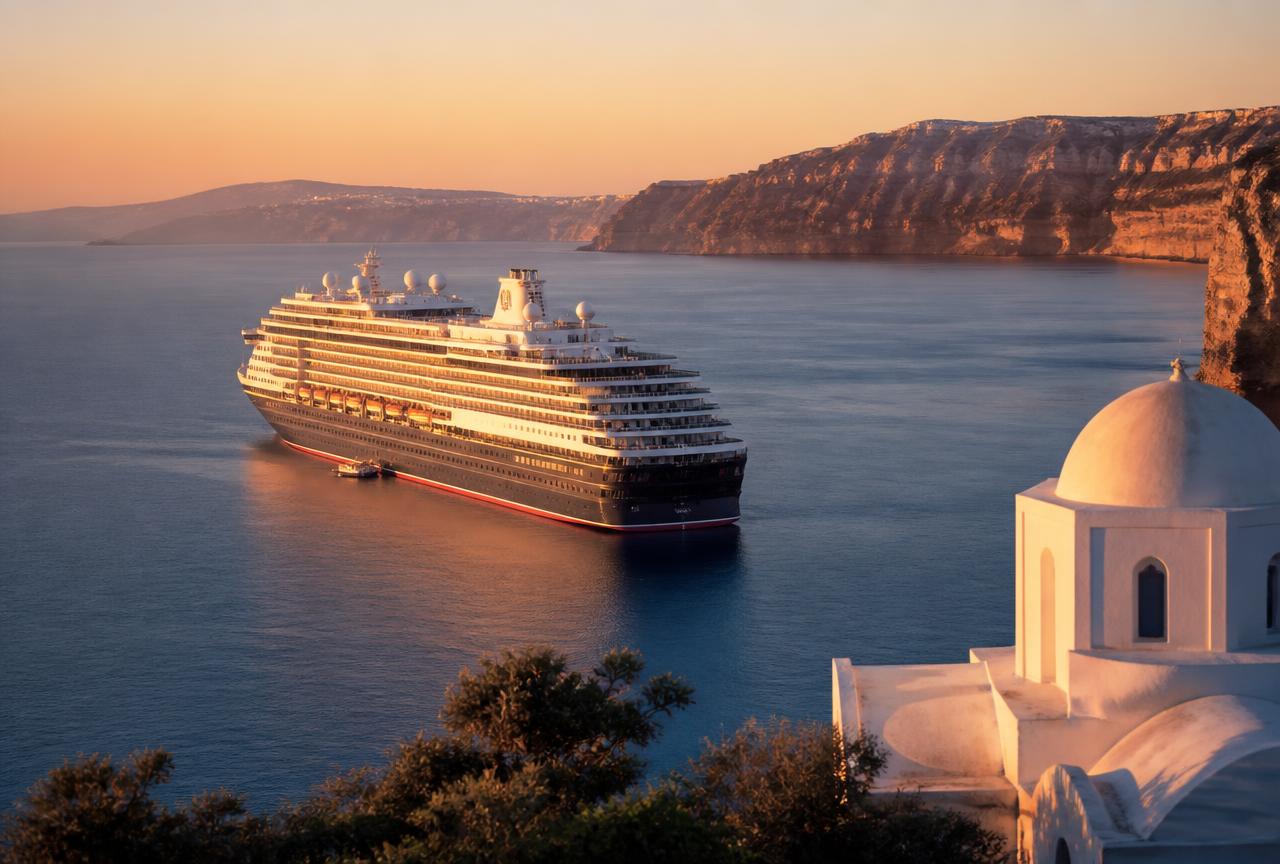
How to choose the right cruise: a Canadian traveller's guide to finding your perfect fit
The Ontario Cruise Center Cruise Fit Framework — nine questions that narrow hundreds of sailings down to the ones that actually suit you.
Eric Mallari12 min read
The best cruise isn't necessarily the newest ship, the cheapest fare or the cruise line with the highest rating. It's the one that fits who you're travelling with, how you like to travel and what you want from the experience.
Why choosing a cruise got harder
Choosing a cruise used to seem fairly straightforward. Pick a destination. Choose a ship. Book a cabin.
Today, the choices are almost endless. There are enormous resort style ships packed with restaurants, entertainment and activities. Smaller premium ships. Luxury ships. River cruises. Expedition vessels. Short Caribbean getaways and longer journeys through Europe, Alaska and destinations most of us once only dreamed about visiting.
Cruising itself continues to grow. A record 37.2 million ocean going passengers sailed globally in 2025, and nearly 90% of cruisers say they intend to cruise again.
At the same time, more people are considering cruising for the first time. The percentage of travellers open to taking their first cruise increased from 55.3% in 2020 to 75.6% in 2025.
That's great news for travellers. But it creates another problem: how do you know which cruise is actually right for you?
I think the answer is to stop looking for the "best cruise" and start looking for your best fit. That's the idea behind what I call the Ontario Cruise Center Cruise Fit Framework.
1. PEOPLE: Who are you travelling with?
Before choosing a cruise line, start with the people taking the trip.
Are you travelling as a couple, solo, with friends, with children or grandchildren, as part of a multigenerational family, or for a birthday, anniversary or other celebration?
This can completely change what makes a cruise a good fit. A couple looking for quiet evenings, great dining and interesting ports may want a very different ship from grandparents travelling with children and grandchildren.
Multigenerational cruising is particularly important today. About 75% of cruisers travel with at least one other generation, and 34% cruise with three to five generations.
The right cruise needs to work not just for the person booking it, but for the people sharing the experience.
2. PURPOSE: What do you want from this vacation?
This is one of the most important questions I would ask before recommending a cruise. What are you really hoping to get from the trip?
Maybe it's relaxation, adventure, culture and history, food and wine, entertainment, family time, romance, meeting people, exploring new destinations, or simply getting away from winter.
Two people can look at exactly the same cruise and see completely different vacations. One traveller might look at a Mediterranean itinerary and imagine sitting at cafés, walking through historic towns and trying local food.
Another might see the same itinerary and immediately start looking for cycling tours, hikes and active excursions.
Neither approach is better. They're simply different ways of travelling. Knowing what you want the vacation to feel like makes the rest of the decisions much easier.
3. PLACE: Where do you want the cruise to take you?
This is where many people naturally begin, and destination really does matter.
In a 2026 survey of more than 480 frontline travel advisors in Canada and the United States, itinerary and destination were tied with price as the most important factors clients consider when selecting an ocean cruise.
So ask yourself: is the ship the vacation, or is the ship taking me to the vacation?
If you're looking primarily for sunshine and relaxation, the Caribbean might make sense. If history, food and exploring cities are important, the Mediterranean could be a better fit. If you're drawn to wildlife and dramatic landscapes, Alaska deserves consideration.
River cruising can put destinations at the centre of the experience in an entirely different way. Expedition cruising opens the door to more remote places and a much more exploration focused style of travel.
Canadian demand is also becoming more diverse. During the first two months of the 2026 Wave Season, TRAVELSAVERS Canada reported year over year increases of 40% in expedition cruise sales, 15% in river cruising, 14% in luxury and 9% in traditional ocean cruising.
There isn't one type of cruise winning. Travellers are looking for different experiences.
4. PACE: How do you like to travel?
This is a question people don't ask themselves often enough. What does your ideal vacation day look like?
- Relaxed: A leisurely breakfast. Some pool time. Maybe the spa. A good book. Dinner and a show.
- Balanced: Explore during part of the day, but leave enough time to enjoy the ship and unwind.
- Active: Walking tours, cycling, hiking, kayaking and exploring as much of a destination as possible.
- Full On Explorer: You're off the ship early and don't want to come back until you've seen everything you possibly can.
I'm personally drawn to the active side of travel. I'm an avid cyclist and you'll often find me at the local YMCA when I'm home, so I understand the appeal of actually doing something when you visit a destination. But your perfect cruise doesn't have to look anything like mine. That's the point. The cruise should fit you.
5. SHIP: What do you want from the ship itself?
Only after answering the previous questions would I start seriously narrowing down ships. Think about what you want onboard.
Do you want big entertainment and Broadway style shows? Multiple restaurants and bars? Water parks and family attractions? Quiet adult spaces? Excellent food and wine? Enrichment and lectures? Live music? Wellness facilities? A smaller, more intimate atmosphere? Luxury service? A ship designed primarily to explore destinations?
A huge resort style ship can be fantastic for someone who wants the ship itself to be a major part of the vacation. Someone else may prefer a smaller ship where the destinations take centre stage. Ship size and style are a large part of why one cruise costs $2,000 and another costs $20,000.
Neither one is automatically better. Don't choose a ship because somebody else loved it. Choose it because the experience matches the way you travel.
6. PRICE: What will the whole vacation actually cost?
This is where I think Canadian travellers need to be especially careful. Don't compare cruise fares. Compare vacations.
A $3,000 cruise isn't necessarily a $3,000 vacation.
Depending on the cruise line, fare and itinerary, your actual trip may also include taxes and fees, flights from Canada, a pre cruise hotel, airport and port transfers, gratuities, drinks, WiFi, specialty dining, shore excursions, travel insurance, currency conversion and post cruise accommodation. Our guide to what a cruise fare actually includes breaks that down line by line.
That can dramatically change the comparison between two cruises.
The same 2026 advisor research found price was one of the two biggest considerations when selecting an ocean cruise, cited by 81%, while 62% identified all inclusive pricing that includes gratuities and alcohol as important.
Interestingly, Canada based advisors in the survey reported an average client spend of $3,741 per person on ocean cruise vacations, although actual spending varied enormously depending on trip length, cruise category and cabin.
The lowest advertised fare isn't necessarily the best value. I prefer looking at what the whole trip is likely to cost and what you're getting for that money.
7. CABIN: How will you actually use it?
Inside? Oceanview? Balcony? Suite? There's no universal answer.
Instead ask: how much time am I likely to spend in my cabin, and what matters to me while I'm there?
On a port intensive itinerary where you're exploring from morning until evening, you might decide you'd rather spend money on experiences ashore. On a scenic itinerary such as Alaska, sitting on your own balcony watching the landscape go by could become part of the experience itself.
Some people simply feel better with natural light and private outdoor space. Others are perfectly happy sleeping in an inside cabin and spending their waking hours elsewhere. Our comparison of inside, oceanview and balcony cabins works through the same tradeoffs.
Your cabin is another fit decision, not a status decision.
8. CALENDAR: When can you travel?
Now we look at timing. Your travel dates can affect weather, crowds, cruise pricing, airfare, destination availability, school holidays, hurricane seasons, daylight hours and excursion availability. How far ahead you book matters as much as the season you choose.
For Canadians, there's another consideration: getting to the embarkation port. A cruise departing from Florida, Vancouver or Europe can involve very different flight costs and logistics from Ontario — our guide to cruising from Ontario and the best cruise ports for Ontarians cover that side of the trip.
Sometimes a cruise that looks more expensive initially can become the better value once flights, hotels and transfers are included.
Look at the entire journey from your front door until you're back home.
9. CONFIDENCE: Are you comfortable with your choice?
After going through everything above, ask yourself one final question: am I confident I've chosen the right cruise?
Not: "Did I find the cheapest cruise?" Not: "Did I book the newest ship?" Not even: "Did I choose the cruise line with the best reviews?"
The question is whether the vacation fits you.
There's a reason professional advice remains important even though travellers have more information than ever. Cruise Lines International Association reports that 79% of cruise travellers say travel advisors have a meaningful impact on their decision to cruise. If you're weighing that choice, our guide to booking direct or using a travel advisor lays out both sides.
The value of advice isn't always finding another cruise. Sometimes it's eliminating all the cruises that aren't right for you.
Your Cruise Fit
Before you start searching hundreds of sailings, try answering these nine questions:
- PEOPLE: Who am I travelling with?
- PURPOSE: What do I want from this vacation?
- PLACE: Where do I want to go?
- PACE: How active or relaxed do I want to be?
- SHIP: What kind of onboard experience matters to me?
- PRICE: What's my realistic total trip budget?
- CABIN: How important is my space onboard?
- CALENDAR: When can I travel?
- CONFIDENCE: Do I feel comfortable making the final choice?
There Is No Best Cruise
One of the things I've learned about travel is that someone else's perfect vacation isn't necessarily yours.
The biggest ship isn't automatically better. Luxury isn't automatically better. A balcony isn't always necessary. The cheapest fare isn't always the best value. And the cruise line your neighbour loves may not be the one I'd recommend for you.
That's where good cruise planning should begin.
There is no best cruise. There is a best cruise for you.
Not sure which cruise fits you?
If you're considering a cruise and the choices are starting to feel overwhelming, you don't have to sort through everything alone. Tell me a little about how you like to travel, who you're travelling with and what you're hoping to experience. I'll help you narrow down the options and start looking in the right direction.
Found this helpful? Share it with your travel crew
Related dispatches
First-time cruise guide for Canadians: what to know before you book
From choosing the right ship and cabin to passports, insurance, gratuities and getting to the port, here's what Canadian travellers should understand before booking a first cruise.
Read Dispatch
12 min read
What is actually included in a cruise fare—and what is not
The advertised fare and the total cost of the holiday are not the same number. Here is every line item to account for before you put down a deposit.
Read Dispatch
10 min read
How Far in Advance Should You Book a Cruise? A Complete Canadian Planning Guide
The best time to book a cruise depends far more on your itinerary and cabin needs than on chasing a last-minute deal. Here are the booking windows I use with Canadian travellers.
Read Dispatch
11 min read