

How Far in Advance Should You Book a Cruise? A Complete Canadian Planning Guide
Booking windows for Caribbean, Alaska, Europe and river sailings — and what actually changes when you wait.
Eric Mallari11 min read
"When is the best time to book a cruise?" is one of the first questions I'm asked, and it's the one that has the least universal answer. For many mainstream sailings, roughly six to twelve months ahead is a useful starting point. But that range is a starting point, not a rule — destination, travel dates, cabin requirements, how specific your plans are, and how you'll physically reach the embarkation port all move the answer in different directions.
The Short Answer: Start Around 6 to 12 Months Ahead
For many mainstream cruises, beginning your planning somewhere in the six-to-twelve-month range gives you a reasonable balance of choice and time. You generally still see a full spread of cabin categories, you have time to arrange flights and time off, and you aren't committing so far out that your plans are pure guesswork. Treat it as a default starting point rather than a universal rule.
Earlier planning tends to become more valuable as demand concentrates. That includes Christmas and New Year's sailings, March Break, summer school holidays, suites, specific balcony locations, connecting cabins, family and multi-generational trips, a particular ship or a particular itinerary. It also applies to Alaska, most of Europe, river cruises, and any trip where your vacation dates are fixed and non-negotiable.
You may be able to wait considerably longer when you're genuinely flexible — about dates, ship, itinerary, cabin location, or even the destination itself. Flexibility is what buys you time, not luck.
Cruise Advisor Insight
The more specific your requirements become, the more valuable early planning becomes.
Why There Isn't One Perfect Time to Book
Picture two travellers. Traveller A says: "We want to take a cruise sometime next winter. We're flexible on dates, ship and cabin." Traveller B says: "We want Alaska in July, including Glacier Bay, with a balcony, on this particular week."
Traveller A is shopping for a cruise. Traveller B is shopping for the cruise. Those are two completely different planning problems, and the same booking-window advice cannot serve both.
There's a second point that trips people up: a ship still having space is not the same as the right cabin still being available. Sailings very often remain open long after the categories most people actually want have thinned out. Specific balcony locations, connecting cabins, higher-occupancy rooms and suites are limited in number, and they tend to go first on popular dates and popular itineraries.
So the real question isn't "is this cruise sold out?" It's "is the version of this cruise I actually want still available?" If you're still weighing categories, our guide to choosing between inside, oceanview and balcony cabins is a useful companion to this one, because cabin requirements are usually what determine how early you need to move.
What Actually Happens to Cruise Fares Over Time?
Cruise pricing is dynamic. It's tempting to look for a clean rule — prices always rise as sailing approaches, or prices always drop at the end — but neither holds. Fares may move up or down depending on demand, remaining inventory, the specific cabin category, the season, the itinerary and whatever promotions are running at the time.
One sailing may firm up steadily because it's selling well. Another may soften in a particular category because that category is slower to fill. It's entirely possible for balcony pricing to rise on the same sailing where inside pricing eases, or the reverse.
This is also why advertised discount percentages can mislead. A large headline reduction tells you what a fare is being compared against — it doesn't tell you whether the resulting vacation is good value for you. Two sailings with very different discounts can end up at similar real-world costs once inclusions, gratuities, drinks, Wi-Fi, excursions and flights are counted.
Before comparing any two fares, it helps to know what is actually included in a cruise fare and what isn't, and to understand the structural reasons one cruise can cost $2,000 while another costs $20,000. Those two pieces do more for your budget than watching a discount ticker.
Look at actual value rather than the size of the advertised discount.
Caribbean Cruises: Flexibility Gives You Options
The Caribbean is generally the most forgiving region to plan, simply because of scale. There are many ships, many departure ports, many itineraries and a long season. If your requirements are moderate, six to twelve months ahead is a comfortable planning starting point, and shorter windows can still work.
That flexibility narrows quickly around fixed dates. Christmas and New Year's weeks, March Break and peak summer concentrate an enormous amount of family demand into a small number of sailings. Add connecting cabins, a suite, higher-occupancy rooms or a specific balcony location, and the practical booking window moves earlier — sometimes considerably.
There is an Ontario advantage worth noting. Florida and other southeastern departure ports are comparatively accessible from Toronto, with a range of routings available across the season. That accessibility is part of why some later-booking opportunities remain practical for Caribbean sailings in a way they often aren't for European ones. It doesn't guarantee anything about cost — air pricing moves on its own logic — but it does mean fewer moving parts to solve at short notice.
Alaska: Earlier Usually Means More Choice
Alaska compresses an entire year of demand into a short season, and that changes the arithmetic. The most popular itineraries, the most scenic sailing dates and the cabin categories travellers most want in Alaska are all in limited supply at the same time.
Many travellers arrive with very particular priorities: Glacier Bay specifically, a balcony rather than an inside cabin, a certain month for weather or wildlife, a specific ship, or a cruisetour with a land component through the interior. Each of those requirements narrows the field, and stacking several of them narrows it sharply.
For that reason, roughly six to twelve months or more ahead is a sensible planning range when selection matters. That's guidance rather than a guarantee — some sailings hold availability longer, and late opportunities do appear — but planning as though selection is finite is generally the safer assumption in Alaska.
Don't only ask "can I still find an Alaska cruise?" Ask "can I still build the Alaska vacation I actually want?"
Europe: Don't Forget the Flights
This is where Canadian planning differs most from the advice you'll read elsewhere. A genuinely attractive cruise fare departing Barcelona, Rome, Athens, Amsterdam or Copenhagen does not automatically produce an attractive total vacation cost. From Ontario, the transatlantic portion of the trip is a significant part of the decision, and it deserves to be planned at the same time as the cruise — not after it.
A European cruise is really several bookings that have to agree with each other: the sailing itself, the cabin, international flights, pre-cruise accommodation, transfers between airport, hotel and pier, travel insurance and any shore experiences you don't want to leave to chance. Solving those separately is how people end up with a good cruise fare and an awkward, expensive journey attached to it.
Where dates and cabin selection matter, roughly six to twelve months or more ahead is a useful starting range. That timing also gives you a realistic shot at sensible flight routings rather than whatever remains.
For any international sailing, I strongly recommend planning to arrive before embarkation day rather than flying in on the morning of the cruise. Transatlantic itineraries involve overnight flights, connections and the possibility of delayed baggage, and a ship will not wait. How much buffer is right depends on your routing and your tolerance for risk, but arriving ahead of the ship is the single most valuable planning habit for European cruising.
Cruise Advisor Insight
The cruise shouldn't be planned separately from the journey required to reach it.
River Cruises: Smaller Ships Change the Equation
River ships operate on a completely different scale from ocean vessels. Where a mainstream ocean ship may carry several thousand guests, a European river ship typically carries a fraction of that. Fewer guests means far fewer cabins, and far fewer cabins in each category and on each deck.
I'd avoid rigid month-count rules here, because river demand varies enormously by river, season and operator. What holds consistently is this: when your requirements are specific, small inventory makes them harder to satisfy later. That applies to a particular itinerary, a particular sailing date, a specific cabin category, a specific deck, or a popular travel period such as Christmas markets, tulip season or high summer.
Deck and cabin choice matters more on a river ship than most first-time river cruisers expect, because the view, the window type and the walking distances all change floor by floor. Our guide to choosing the right deck on a European river ship covers what actually differs between them — and it's worth reading before you decide how early you need to commit.
Holidays, March Break and Families: Book Earlier
Fixed travel dates are the single biggest reason to plan earlier, because they remove your most powerful negotiating tool: the ability to move. Christmas, New Year's, March Break, summer school holidays, and personal fixed dates such as a milestone anniversary all concentrate demand into a small number of sailings that everyone else is looking at too.
Family travel adds a second constraint on top of the first. Families rarely need just "a cabin" — they need connecting cabins, higher-occupancy rooms, family-configured accommodations, or several cabins located near one another. That inventory is genuinely limited on most ships, and it is not evenly distributed across categories or decks. It's common for a sailing to have plenty of space overall while having no workable family configuration left.
If you're coordinating several households, our guide to multi-generational cruising walks through how cabin layout, proximity and shared planning decisions tend to drive the whole trip.
Fixed dates + specific cabin requirements = start earlier.
Is Wave Season Really the Best Time to Book?
Wave Season is the cruise industry's major promotional period in the early months of the year, when lines and travel partners run some of their most visible offers. It's a real thing, and it's a reasonable time to shop.
What Wave Season promotions include varies. Depending on the line and the sailing, offers may combine fare reductions, onboard credit, reduced deposits, cabin upgrades, reduced or free fares for additional guests, airfare-related incentives, or other perks. Some of that value is substantial; some of it is value you would never have used.
What Wave Season does not do is guarantee the lowest fare of the year. Cruise pricing is dynamic, and a strong promotion on one sailing can coexist with better real-world value on another sailing that isn't being advertised at all. Percentages alone don't settle it.
The practical conclusion: Wave Season is a good time to shop, but it isn't a reason to postpone a booking that already suits you. If the cruise you want, in the cabin you want, at a cost you're comfortable with is available now, waiting for a promotional window is a gamble on inventory you can't see.
Compare the final vacation value, not the headline discount.
Should You Wait for a Last-Minute Deal?
Last-minute cruise opportunities are real. Lines do move remaining inventory, and travellers who can act quickly sometimes do very well. But last-minute booking is a trade, not a shortcut, and it's worth being clear-eyed about what you're trading away.
Roughly the sixty-to-ninety-day window before sailing is what most people mean by last-minute territory. That's a general description of when remaining inventory becomes visible — not a window in which discounts are promised.
- Cabin choice narrows: Preferred categories and locations are often gone, leaving less desirable positions, and connecting cabins are frequently unavailable.
- Getting there gets harder: Air pricing and routings close to departure may be less favourable, and hotel choices near the port are reduced.
- Shore plans compress: Popular excursions and limited-capacity experiences fill in advance, so the trip you assemble late may not include the things you most wanted.
- Time to prepare shrinks: Passports, insurance, time off and any pre-cruise arrangements all have to be settled quickly.
Always look at the total trip, not just the cruise fare.
Booking Early Doesn't Necessarily Mean Paying for Everything Today
One reason people delay booking is a misunderstanding of what a booking actually commits. Cruise reservations commonly involve a deposit at the time of booking and a final-payment deadline some time before sailing, rather than payment in full up front.
I won't publish universal numbers here, because there aren't any. Deposit amounts, final-payment timing, cancellation schedules and change policies vary by cruise line, itinerary, cruise length, cabin category, fare type and promotion. A promotional fare and a standard fare on the same sailing may carry materially different terms.
What matters is that you understand your specific booking before you place it. Ask, and get the answer in writing: Is the deposit refundable? When is final payment due? When do cancellation penalties begin, and how do they escalate? Can the booking be changed, and at what cost? And what happens if another promotion becomes available after you book — some fares and lines allow adjustments, others don't, and it depends on the circumstances.
Booking early can give you more selection. But you should still understand exactly what you're committing to.
The Canadian Traveller Factor
Everything above applies anywhere. These are the pieces that specifically shape planning from Ontario, and they're the reason Toronto-to-Florida and Toronto-to-Europe are not the same planning exercise at all.
- Airfare: Florida and other southeastern ports are served by a range of routings from Ontario and are comparatively straightforward to solve. Transatlantic travel involves fewer options, longer travel days and more consequence if something goes wrong — which generally pulls European planning earlier.
- Currency: Most cruise fares, onboard accounts, excursions and European hotels are priced in other currencies. Exchange rates move, and I won't forecast them — but it's sensible to budget in your own currency and to know which parts of your trip are exposed to that movement.
- Pre-cruise accommodation: For international sailings especially, arriving before embarkation day is a planning decision, not a luxury. Hotel availability near embarkation ports on peak dates can be limited, so it belongs in the plan alongside the cruise itself.
- Insurance: Coverage needs are personal and depend on your health, your existing coverage and your trip. What I'll say generally is that timing matters — many policies relate to your deposit date — so it's worth reviewing coverage when you book rather than the week before you sail.
- Transportation and transfers: Airport-to-hotel, hotel-to-pier and the return journey are easy to overlook and can add up. Factor them in when you're comparing what a cruise really costs.
The cheapest cruise fare isn't necessarily the cheapest cruise vacation.
A Simple Cruise Booking Timeline
Use this as a quick orientation, then test it against your specific sailing.
| If this sounds like you | Start here |
|---|---|
| I want a specific cruise | Booking earlier |
| I need connecting cabins | Booking earlier |
| I want a suite or a specific balcony | Booking earlier |
| I'm planning Alaska | About 6–12+ months |
| I'm flying to Europe | About 6–12+ months |
| I'm travelling during March Break or the holidays | Earlier |
| I'm booking a river cruise | Earlier when selection matters |
| I'm coordinating several cabins | Earlier |
| I'm completely flexible | Waiting may work |
| I'm hunting last-minute value | Roughly 60–90 days, understanding the trade-offs |
So When Should You Actually Book?
Here is the framework I come back to with almost every traveller: if you want the cruise, start earlier. If you simply want a cruise, flexibility gives you more opportunity to wait.
The more important the ship, the itinerary, the date, the cabin category and the cabin's location become to your enjoyment of the trip, the less sense it makes to rely on whatever inventory happens to remain later. Conversely, if you can genuinely move on dates, ship and destination, time is on your side and there's no need to rush a decision.
Most people sit somewhere between those two positions, and that's fine — the exercise is simply identifying which of your requirements are firm and which are negotiable. Once you know that, the right booking window usually becomes obvious.
The best time to book isn't necessarily when the biggest sale appears. It's when the cruise you want, in the cabin you want, at a price you're comfortable paying, comes together.
Ready to Start Planning?
If you're considering a cruise but aren't sure whether it's too early, too late or exactly the right time to book, I can help you compare available sailings, cabin options and the overall trip considerations that surround them. No pressure and no cost — just a clear look at where things stand.
Found this helpful? Share it with your travel crew
Related dispatches
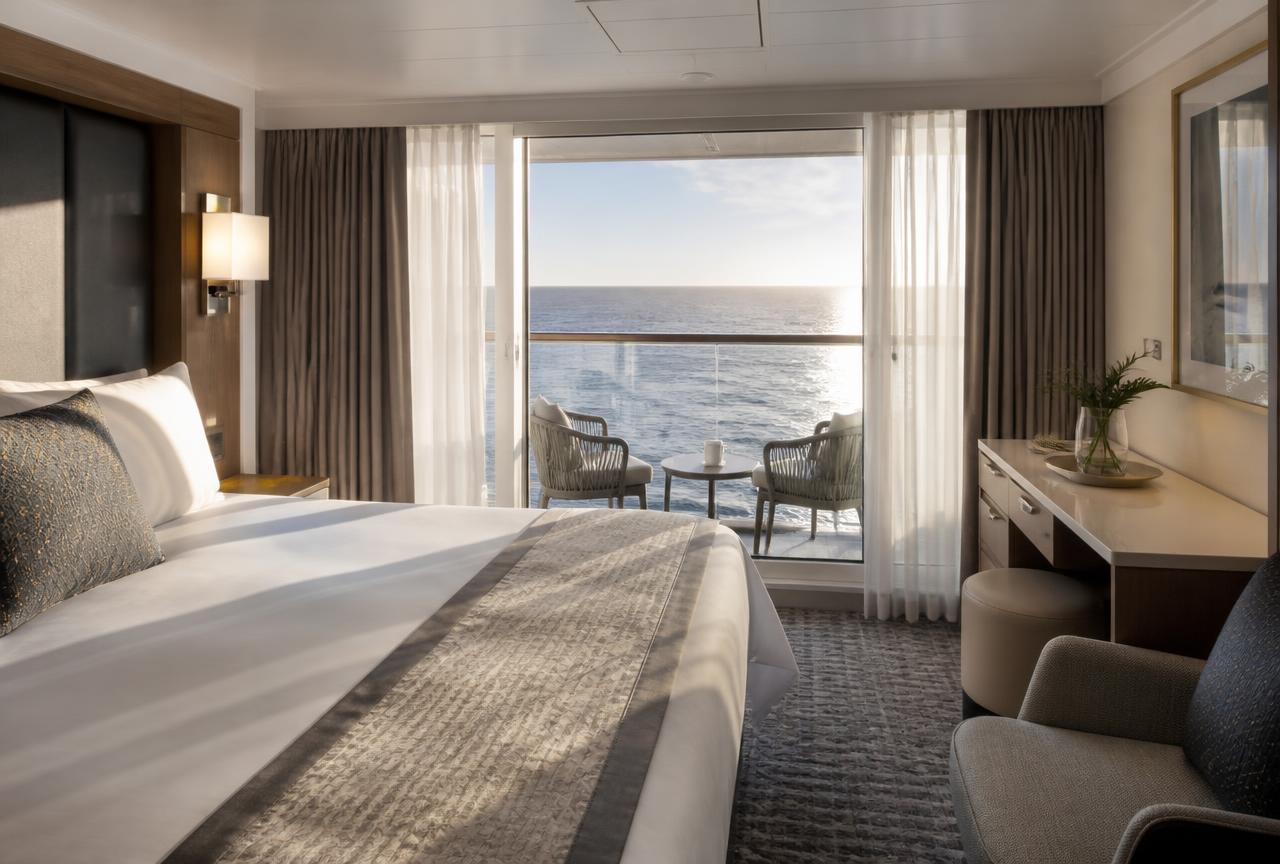
Inside, Oceanview or Balcony: Which Cruise Cabin Is Right for You?
Inside, oceanview or balcony? A practical decision guide to cabin categories, ship location, guarantee fares and when the balcony upgrade is genuinely worth the money.
Read Dispatch
12 min read
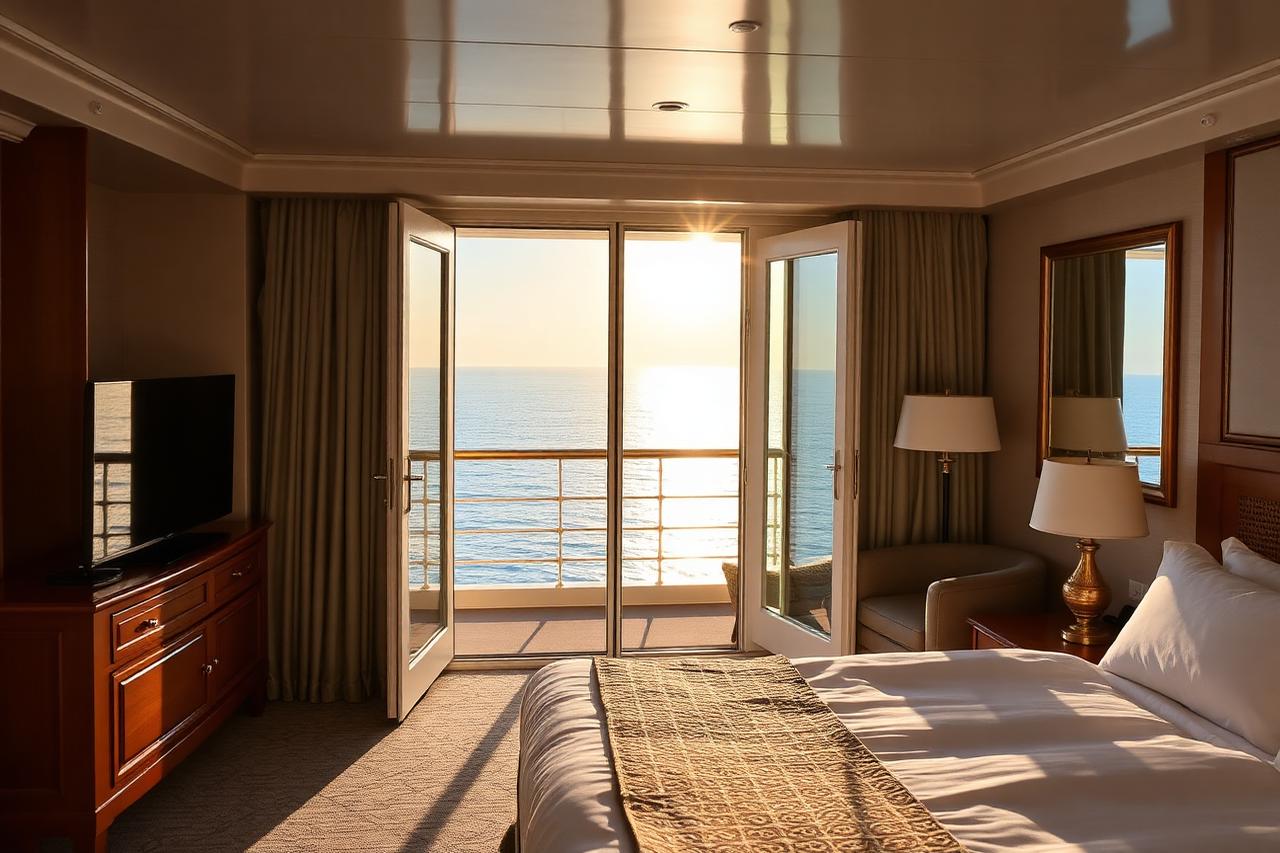
What is actually included in a cruise fare—and what is not
The advertised fare and the total cost of the holiday are not the same number. Here is every line item to account for before you put down a deposit.
Read Dispatch
10 min read

Beyond the Caribbean: Cruise Destinations Worth Considering for Your Next Voyage
The Caribbean is an easy first cruise for good reason. If you're ready for something different, here is how the main alternatives compare on scenery, pace and planning.
Read Dispatch
9 min read