
Fly Direct or Drive: The Best Cruise Ports Accessible to Ontarians
A practical look at the embarkation ports Ontario travellers can reach easily — by air or by highway
Eric Mallari7 min read
Getting to the ship is the part of cruise planning most travellers underestimate. From Ontario, you generally have two paths to the pier: fly to a warm-weather homeport, or drive to a port within a comfortable day on the highway. Neither is automatically better — the right answer depends on your itinerary, your group, your luggage, and how much buffer you want between your front door and the gangway. Here is how the main options compare, and what to watch for on embarkation day.
Florida: the fly-to standard for warm-water sailings
Florida remains the default embarkation region for Caribbean and Bahamas itineraries, and it is well served by air from Toronto. The trade-off is simple: a short flight replaces a long drive, but you add an airport day on each end of your trip.
- Fort Lauderdale (Port Everglades): The terminals sit only minutes from the airport, which makes it one of the least stressful transfers in cruising. A strong choice for Southern and Eastern Caribbean sailings.
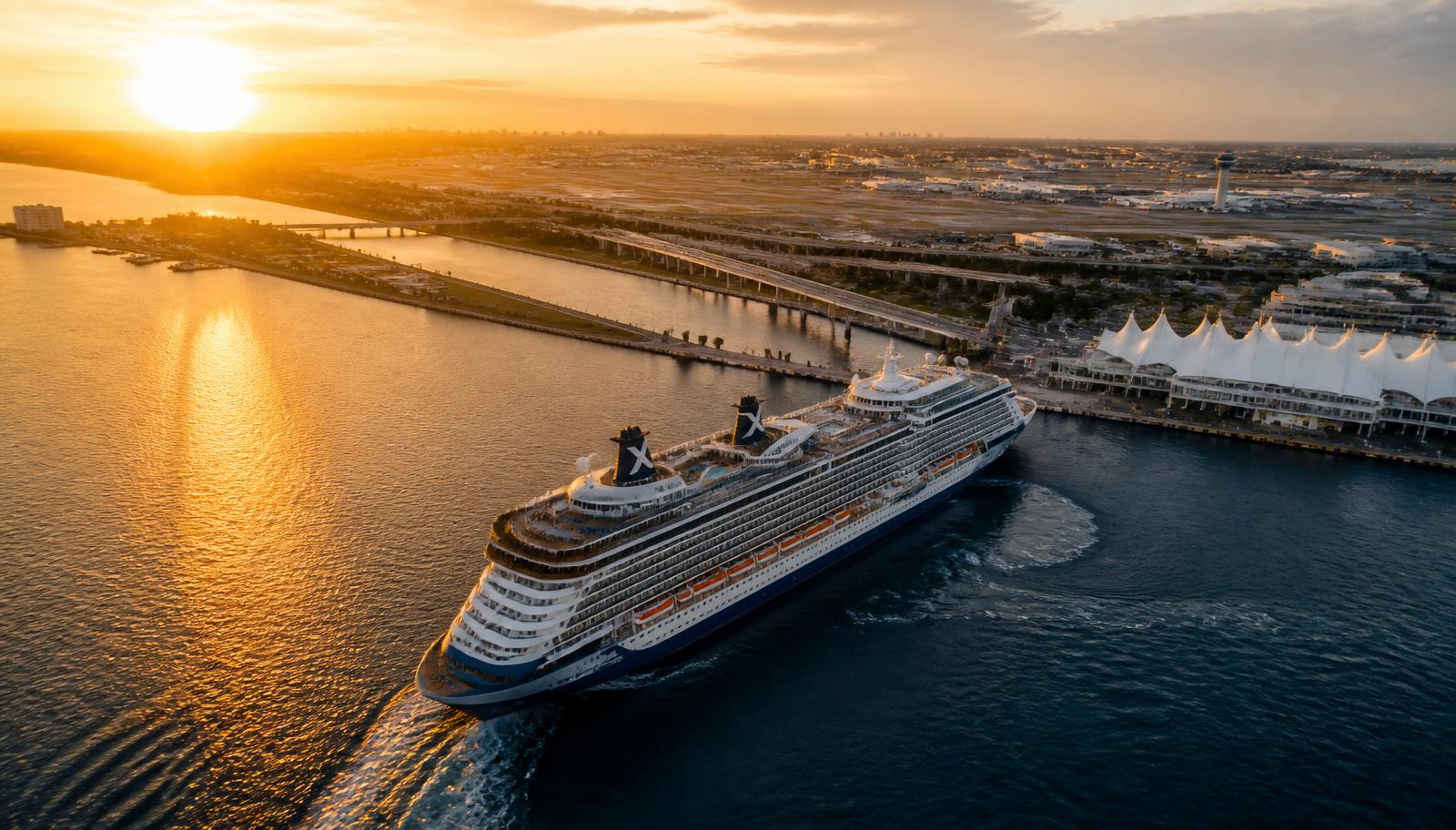
- Miami (PortMiami): The largest terminal complex in the region, with the widest range of ships and itineraries. Traffic on embarkation morning is the main variable — build in extra time.
- Port Canaveral: Convenient for Bahamas and Eastern Caribbean sailings, and the natural pick if you want to pair the cruise with a few Orlando theme-park days.
- Tampa: A calmer, easier-to-navigate option on the Gulf side, typically for Western Caribbean routes. Ship size is limited by a bridge clearance, so the vessels tend to be mid-size.
Philadelphia and the Mid-Atlantic: the long-drive option
For travellers in southern Ontario who would rather not fly, the Mid-Atlantic corridor is within a realistic drive. Philadelphia is a straightforward highway run from the Golden Horseshoe and works well as an overnight stop en route to a New Jersey or Manhattan embarkation.
- Why it appeals: No baggage fees, no liquid restrictions, and you can pack the car with formal-night clothing, mobility equipment or a stroller without a second thought.
- What to plan for: Border wait times, one overnight hotel each way, and the cost of parking at the terminal for the duration of your sailing.
- Best fit: Couples and families who dislike flying, and anyone travelling with gear that is awkward to check.
New York and New Jersey: big-city departures within driving range
The New York area is the most accessible major ocean homeport for Ontario drivers, and it opens up itineraries you cannot easily reach from Florida — Bermuda, Canada and New England, and transatlantic crossings.
- Manhattan Cruise Terminal: A dramatic sail-away past the skyline. Ideal if you want to add two or three days in the city before boarding.
- Brooklyn Cruise Terminal: Quieter and simpler to reach by car than Manhattan, with easier drop-off logistics on embarkation morning.
- Cape Liberty, Bayonne NJ: The most drive-friendly of the three: on-site parking, less city traffic, and quick highway access for the trip home.
The Great Lakes: sailing from your own backyard
Small-ship Great Lakes cruising has expanded in recent years, and for Ontarians it can mean boarding without a flight or a border crossing, depending on the itinerary. Ships are expedition-scale rather than resort-scale, with an emphasis on shoreline history, wildlife and small communities.
- Toronto: When a season includes Toronto calls or turnarounds, it is often the simplest embarkation in the province — no airport, no long drive, and generally no pre-cruise hotel needed.
- Regional lake ports: Seasonal calls at communities along the lakes and the St. Lawrence create itineraries that feel closer to a coastal expedition than a traditional cruise.
- What to expect: A short season, far fewer cabins per ship, and sailings that can fill early. If this appeals, it is generally worth planning a season ahead — our guide to how far in advance to book a cruise walks through the timing.
Patterns worth knowing when you choose a port
A few recurring considerations shape how Ontario travellers pick their embarkation point.
- Private island days: Cruise-line private destinations in the Bahamas tend to appear on short, close-in itineraries, which often means a Florida homeport.
- Short sailings: Three- and four-night cruises leave less room for travel-day problems. The shorter the cruise, the less friction the trip can absorb, so a direct flight or a manageable drive matters more.
- Travelling as a group: When you are coordinating grandparents, adults and children — see our multi-generational cruising guide — drive-to ports remove airport queues, seat assignments and luggage limits from the equation. For some families that convenience outweighs the longer travel day.
How to decide: a quick framework
- Fly if: Your itinerary only departs from Florida, your vacation time is limited, or you value arriving rested over saving on airfare.
- Drive if: You're travelling as a larger group, you're packing heavily, you'd rather avoid airports entirely, or the port is within a comfortable one- to two-day drive.
- Either way: Build a buffer night before embarkation, confirm passport validity for every traveller, and review whether your travel insurance addresses missed connections and trip interruption.
Let's Map Your Port and Travel Day
Tell us where you'd like to sail and who's travelling. We'll compare fly-versus-drive options, flight timing, parking and transfers, and build a plan that gets you to the ship without stress.
Found this helpful? Share it with your travel crew
Related dispatches

Beyond the Caribbean: Cruise Destinations Worth Considering for Your Next Voyage
The Caribbean is an easy first cruise for good reason. If you're ready for something different, here is how the main alternatives compare on scenery, pace and planning.
Read Dispatch
9 min read
A calmer way to plan Caribbean port days
The most common regret after a Caribbean sailing is coming home tired. A simple rhythm of anchor, easy and open days makes a warm-water week feel longer.
Read Dispatch
7 min read
How Far in Advance Should You Book a Cruise? A Complete Canadian Planning Guide
The best time to book a cruise depends far more on your itinerary and cabin needs than on chasing a last-minute deal. Here are the booking windows I use with Canadian travellers.
Read Dispatch
11 min read