
From Ship to Saddle: A Practical Guide to Cruise and Cycling Vacations
Bike-and-barge trips, river and ocean sailings with cycling ashore, rentals versus bringing your own bike, and how to tell a cycling holiday from a cycling excursion
Eric Mallari11 min read
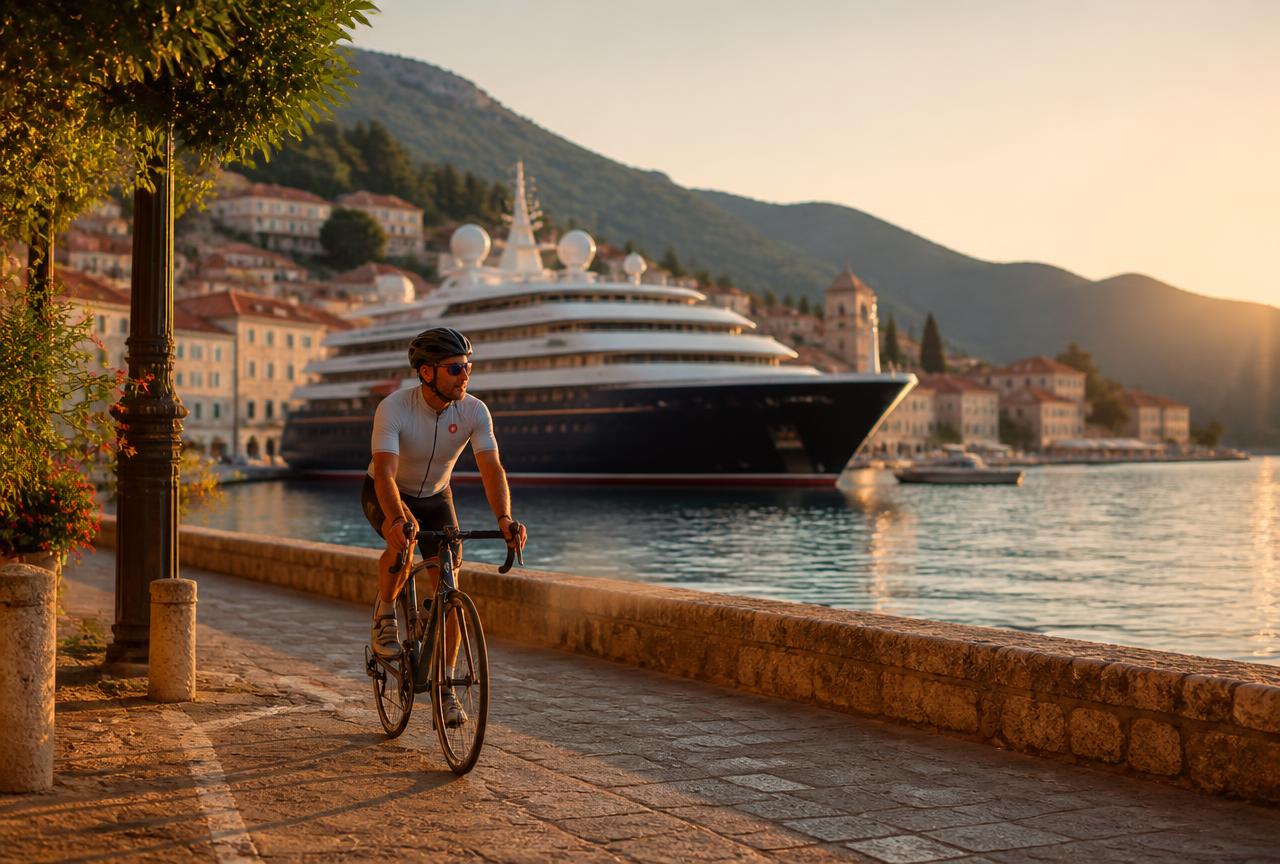
Cycling and cruising pair unusually well. A ship carries your luggage, feeds you and moves overnight, which removes most of the logistics that make a multi-day cycling trip complicated. But "cruise and cycle" covers a wide range of trips — from a bike-and-barge holiday where riding is the whole point, to an ocean sailing where cycling is one excursion among many. The planning is very different depending on which one you actually want, so that is where this guide starts.
2. Bike-and-barge and bike-and-boat travel
Bike-and-barge is the most cycling-committed version of this holiday, and it is well established in the Netherlands, Belgium, France and parts of Germany and Italy. You sleep on a small vessel — often a converted barge or a purpose-built river boat with a few dozen cabins — and ride between stops each day while the boat repositions.
Expect a simpler onboard experience than a river cruise: smaller cabins, a single dining room, limited or no lift, and evenings built around the group rather than entertainment. What you get in exchange is a genuine cycling trip with none of the packing and unpacking.
- Typical structure: A daily route with a guided option and, on many operators, a self-guided alternative using maps or a GPS unit. Distances are usually published in advance.
- Terrain: Many classic bike-and-barge routes follow flat canal paths and dedicated cycleways, which is part of why they suit riders of mixed experience. Others include rolling sections — read the route notes rather than assuming.
- Group size: Small. That shapes the whole trip, socially and logistically, and it also means departures can fill early.
3. River cruises with cycling programmes
Several river cruise lines now include cycling in their active programming, and some carry a fleet of bicycles or e-bikes onboard for guests to use, either on guided rides or independently at ports where that is practical. Availability, fleet size and whether use is included or charged vary by line, ship and sailing.
This is the middle option: a full-service ship with dining, lounges and a daily programme, plus the ability to ride on some days instead of joining the walking tour. If you are choosing a first European river, the Rhine and the Danube offer quite different riding and scenery. Cabin position matters more on a small ship, which our river ship deck guide covers.
- Ask before you book: How many bikes are carried, whether reservation is required, whether e-bikes are available, and on which port days riding is actually offered.
- Guided versus independent: Some lines run guided rides with a leader; others hand you a bike and a map. Both work, but they suit different comfort levels.
- Ride length: Programme rides are commonly short to moderate and paced for a mixed group. If you regularly ride long distances, check whether a longer option exists.
4. Ocean and coastal cruises with cycling ashore
On larger ships, cycling generally appears as a shore excursion: a guided ride from the pier or a short transfer to a trail, with bikes supplied by a local operator. Coastal itineraries in the Mediterranean, Northern Europe, Atlantic Canada and elsewhere often have at least one cycling option in several ports.
The constraint here is time. Port hours, the return-to-ship deadline and transfer distances shape what is possible, so rides tend to be shorter and gentler than a dedicated cycling holiday. Independent rentals are sometimes possible near the pier, but they put the timing entirely on you.
5. Great Lakes and regional cruising
Closer to home, small-ship sailings on the Great Lakes and the St. Lawrence call at communities that sit near established trail networks, including sections of the Waterfront Trail and various rail-trails. Riding here is usually independent or arranged locally rather than part of a formal cycling programme, so it takes a little more research per port.
The advantage for Ontario travellers is the simplicity: a short season, a short journey to the ship, and terrain most riders can handle comfortably. Deployments and port calls change between seasons, so confirm the current itinerary rather than working from an older one.
6. Rent at the port, use the ship's bikes, or bring your own
All three approaches work; they trade convenience against fit.
- Ship-supplied bikes: The simplest option where available. Typically hybrid or city bikes with a limited range of frame sizes. Ask about sizing if you are notably tall or short, and about helmet provision.
- Local rental: Common near many European piers and in bike-and-barge programmes. Quality varies; reserving ahead in peak season is generally wise, and it is worth confirming what is included, such as a helmet, lock, repair kit and route map.
- Bringing your own: Best fit and familiarity, most logistics. Airlines charge for bicycles and have their own packing rules, cruise lines have policies on carrying sports equipment onboard and on storage, and lithium batteries for e-bikes are subject to separate airline and cruise line restrictions. Confirm each policy in writing well before departure.
A practical middle ground
Many riders bring their own pedals, saddle, shoes and helmet and rent the frame. It is a small amount of luggage that fixes most of the comfort problems with a rental bike.
7. E-bikes and mixed fitness levels
E-bikes have made group cycling trips workable for couples and families with different fitness levels, and many operators and cruise lines now offer them alongside conventional bikes. Availability, cost and battery range vary, so treat an e-bike as something to confirm rather than assume.
If your group spans a wide range of ability, an itinerary where riding is optional each day is usually more comfortable than one where everyone is committed to the route. That is often the deciding factor between a bike-and-barge trip and a river cruise with an active programme.
8. Reading the fitness and terrain descriptions
Operator grading systems are not standardised, so the useful details are the specifics rather than the label.
- Daily distance: Look for the range across the week, not the average. One long day can define the trip.
- Elevation: A flat canal route and a hilly coastal route at the same distance are entirely different days.
- Surface: Paved cycleway, gravel towpath, cobbled town centre or shared road — each changes the bike you want and how tiring the ride feels.
- Traffic: Dedicated cycling infrastructure is extensive in some regions and patchy in others. Ask what proportion of the route is off-road or protected.
- Support: Whether a vehicle or the vessel can pick up a rider who has had enough, and whether a guide carries tools and spares.
9. Insurance, safety and equipment considerations
Cycling adds a few questions worth raising before you travel, and the answers depend on your policy and the operator rather than on any general rule.
- Check how your policy treats cycling: Some travel insurance policies address recreational cycling differently from other activities, and coverage for a bicycle you bring with you may sit under baggage limits with its own caps. Read the wording and ask the insurer — our travel insurance guide sets out the sections to look at.
- Helmets and local rules: Requirements and cycling conventions differ by country and province. Confirm what the operator supplies and what local law expects.
- Waivers and liability: Operators generally require a waiver. Read it, particularly for self-guided riding.
- Medical realities at sea: Treatment onboard is billed to the passenger in most cases, and access to care in remote ports can be limited. That is worth factoring into how ambitious a route you choose.
10. Planning notes for Canadian travellers
A few things come up regularly for clients travelling from Ontario.
- Flight logistics: If you are bringing a bike, the airline's oversize baggage rules and fees are usually the largest single planning item. Confirm them for every leg, including connections on different carriers.
- Season and daylight: European cycling seasons run roughly spring to autumn, with the most comfortable riding temperatures often in the shoulder months. Great Lakes seasons are shorter still.
- Book early for small vessels: Bike-and-barge boats and expedition ships carry very few passengers, so popular departures can close well ahead. Our booking-window guide covers realistic timing.
- Budget the whole trip: Rentals, excursions, gratuities and pre-cruise nights all sit outside the headline fare — the same arithmetic as any other sailing, covered in what is actually included in a cruise fare.
Deciding what kind of active cruise fits you
Start with a simple question: on the days you are not riding, what do you want to be doing? If the answer is resting for tomorrow's ride, look at bike-and-barge. If it is a good dinner, a lecture and a walk through a town centre, look at river cruising with an active programme. If it is a pool, a show and a spa with one bike day in the middle, an ocean itinerary is the right shape.
Tell us roughly how far you like to ride, how often, and who is travelling with you, and we can put two or three genuinely comparable options side by side.
Ready to Chart Your Course?
Tell us how much of the trip you want to spend on a bike, how far you like to ride, and where you'd like to go. We'll compare the options that genuinely fit.
Found this helpful? Share it with your travel crew
Related dispatches
Rhine vs. Danube: Which Is Better for Your First European River Cruise?
Castles and vineyards, or Vienna and Budapest? A practical comparison of Europe's two most popular river cruise routes for Canadians booking their first sailing.
Read Dispatch
9 min read
How to choose the right deck on a European river ship
River ships are small, so deck choice changes your whole week. Here is how I weigh light, sightlines, stairs and budget before recommending a cabin.
Read Dispatch
7 min read
How Far in Advance Should You Book a Cruise? A Complete Canadian Planning Guide
The best time to book a cruise depends far more on your itinerary and cabin needs than on chasing a last-minute deal. Here are the booking windows I use with Canadian travellers.
Read Dispatch
11 min read